

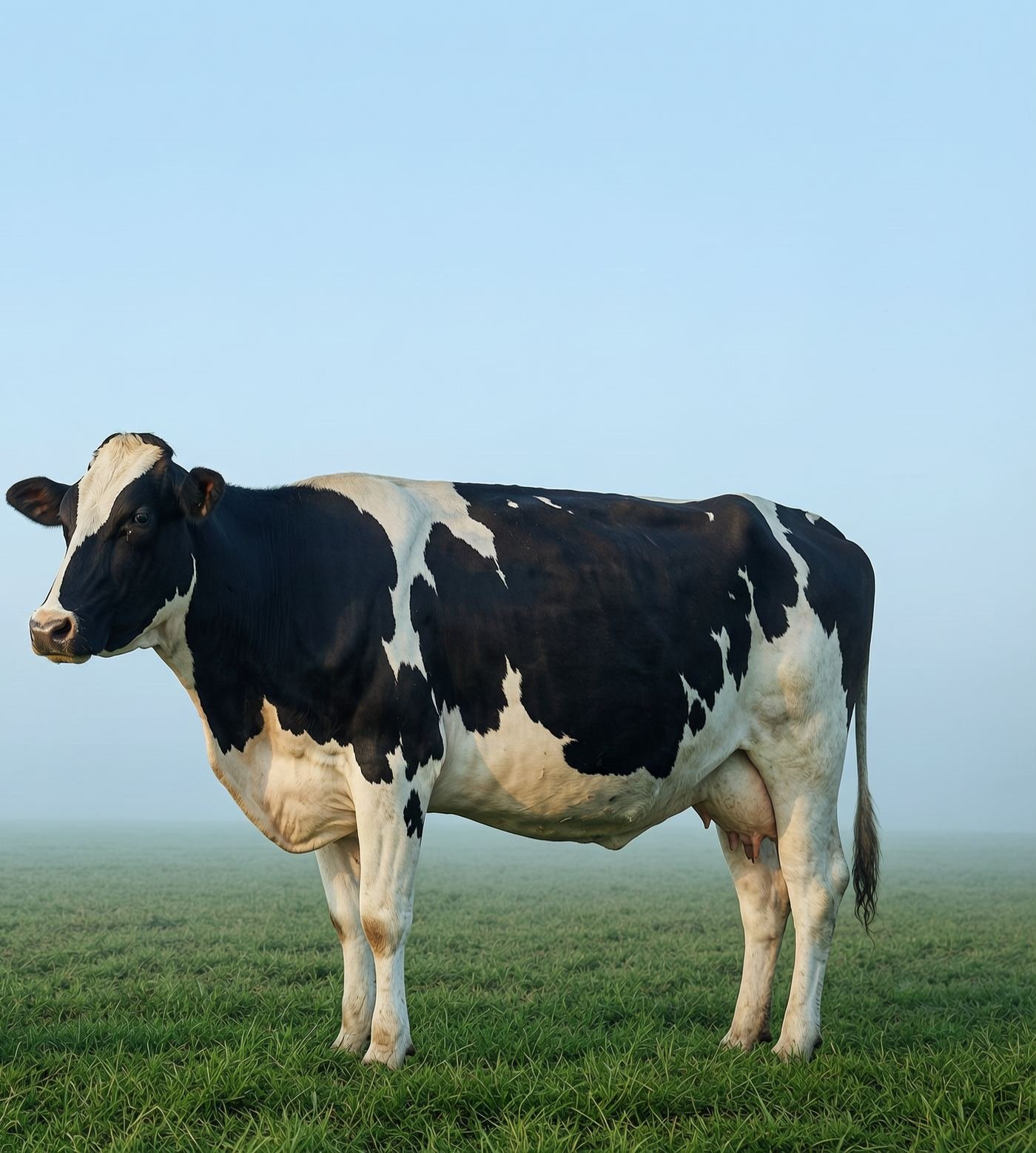
She can't eat her way out of the gap.
A high-producing animal needs far more energy than a low-producing one. The amount she can eat has a physical limit.
Appetite has a ceiling. Milk does not.
In early lactation especially, milk output rises faster than appetite, and the gap is made up from body reserves.
Higher demand
More milk means a sharply higher daily energy requirement.
Limited intake
Dry-matter intake has a physical ceiling. The rumen can only hold so much.
Energy deficit
The animal draws on body reserves, which can affect condition and yield.
Bypass fat
Fat carries roughly 2.25× the energy of carbohydrate, delivered past the rumen, not fermented in it.
Close the gap without loading the rumen.
The shortfall is otherwise taken from the animal's own body reserves. Concentrated energy fills it, without extra fermentable starch.
Illustrative, not to scale. Actual response depends on the animal and the whole ration.
Each obvious fix has a cost.
Adds starch
Fermentable starch can push rumen pH down.
Adds energy, with a catch
Free unsaturated oil in the rumen can interfere with the microbes that digest fibre.
The third way
Concentrated energy, protected in the rumen and released further down the tract, without unnecessarily adding rumen-fermentable carbohydrate.
Fat packs more into every kilogram.
Approximate gross energy per unit weight: a general nutritional principle, not a product claim.
Ready to put golden energy in the ration?
Tell us about your herd, your region or your institution. The right team will come back to you.